
PhenoWorks
An agentic-first crop phenotyping platform that turns multi-sensor agricultural data into a searchable scientific knowledge base using modular, AI-powered analysis pipelines and intelligent agents that help researchers analyze data, uncover insights, and accelerate discovery.
Explore PhenoWorks
From data to scientific discovery
Bring your data together, turn it into meaningful measurements, and work with an AI assistant to analyze results and develop research outputs. Select any feature below to explore how it works and see an example.
Research Data Collection
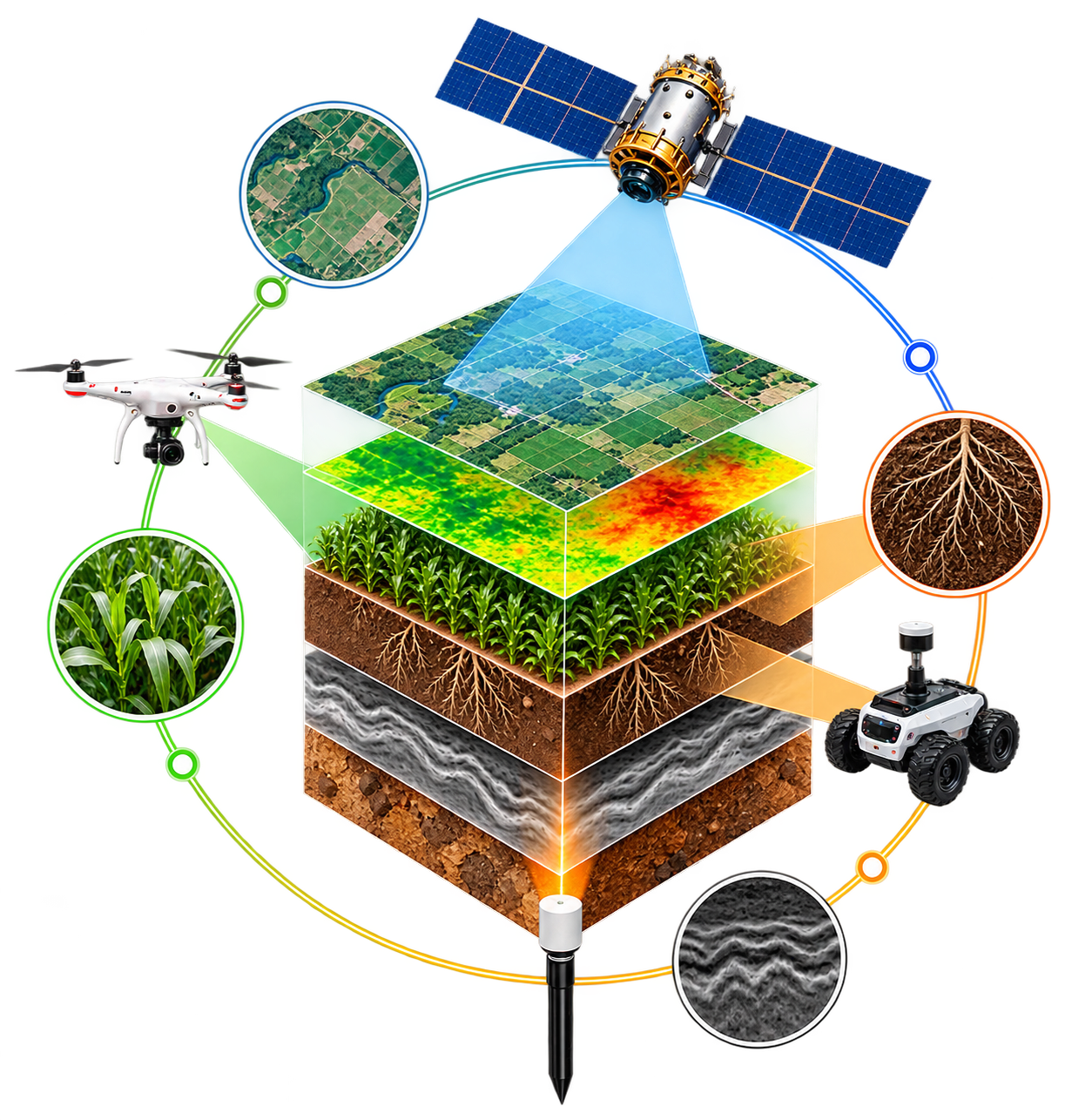
Keep your experiments, images, sensor readings, field observations, and research documents together. Extend the platform to support other data modalities, such as laboratory measurements and genomic data.
Analysis & Evidence Building
Turn raw data into reproducible findings with LgoPy analysis pipelines. Like Lego pieces, each block performs one task, such as calculating NDVI or measuring canopy cover. Connect compatible blocks into workflows you can share and reuse across datasets.
Scientific Knowledge Base
Connect images, extracted features, tables, and documents into a shared research knowledge base. This lays the foundation for multimodal RAG, helping the agent find relevant context and support its answers with evidence from your research.
PhenoWorks Agent
Work with an AI assistant to process images, extract features, and analyze your data using available LgoPy blocks. Ask it to help interpret results and draft preliminary-data sections for manuscripts or grant proposals, drawing on the datasets, methods, and evidence it can retrieve from your workspace.
Research outputs
Build on your data and analysis to produce new findings, manuscripts, and grant proposals, or continue with downstream analysis.